
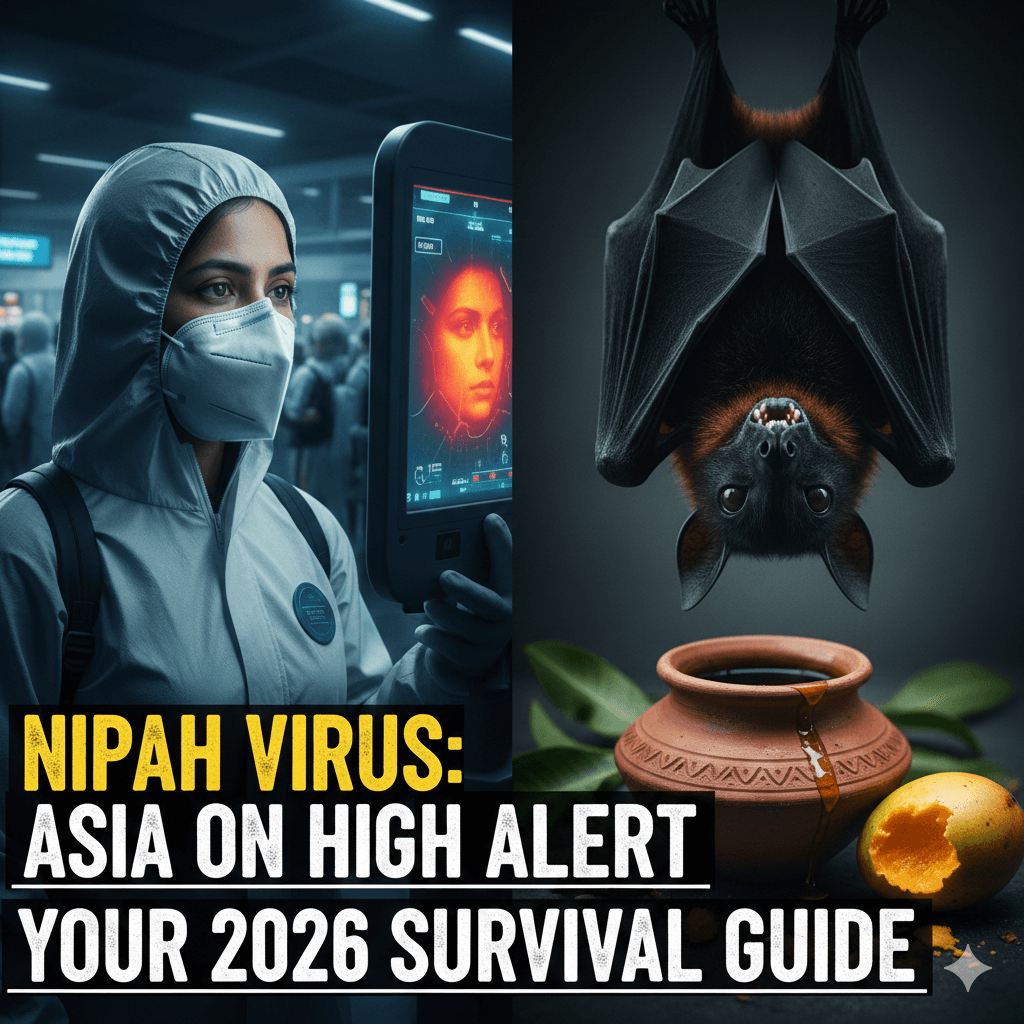
Nipah Virus Outbreak: Why Asia is on High Alert and How You Can Stay Safe
The recent detection of Nipah virus (NiV) cases in West Bengal, India, has sent a ripple of concern across Asia. As of late January 2026, major travel hubs in Thailand, Nepal, and Taiwan have reinstated “COVID-style” health screenings for passengers arriving from affected regions.
While the risk to the average traveler remains low, the high fatality rate—historically between 40% and 75%—has made early detection and prevention a top priority for global health authorities.
What is Happening at the Airports?
To prevent cross-border transmission, international gateways like Bangkok’s Suvarnabhumi and Kathmandu’s Tribhuvan International have implemented the following:
-
Thermal Scanning: Recalibrated sensors to detect even low-grade fevers.
-
Health Beware Cards: Instruction cards given to travelers explaining what to do if symptoms like headache or respiratory distress appear within 21 days of arrival.
-
Digital Health Declarations: Mandatory forms focusing on travel history and exposure to potential animal reservoirs.
How to Prevent Nipah Virus: A Practical Guide
Nipah is a zoonotic virus, meaning it jumps from animals (specifically fruit bats) to humans. It can also spread through contaminated food or direct person-to-person contact. Here is what we must do to stay protected:
1. Practice Food Safety
Contaminated food is a primary transmission route. In affected or endemic areas:
-
Avoid Raw Date Palm Sap: Bats often drink from the collection pots, contaminating the sap with saliva or urine. If you must consume it, ensure it is boiled first.
-
Wash and Peel Fruit: Thoroughly wash all fruits with clean water.
-
Discard “Bat-Bitten” Fruit: Never eat fruit found on the ground or fruit that shows signs of animal bites.
2. Avoid Direct Contact with Animals
Fruit bats (flying foxes) and pigs are the main carriers.
-
Stay Away from Roosting Sites: Avoid areas where bats are known to congregate.
-
Protective Gear for Farmers: If you work with livestock, especially pigs, always wear gloves, masks, and protective clothing.
3. Maintain Strict Personal Hygiene
Because the virus can spread between humans through bodily fluids:
-
Regular Handwashing: Use soap and water frequently, especially after visiting public spaces or healthcare facilities.
-
Avoid Sharing Utensils: Do not share cups, cutlery, or personal items with anyone showing flu-like symptoms.
-
Safe Caregiving: If caring for someone who is ill, use Personal Protective Equipment (PPE) including N95 masks and gloves.
4. Know the Early Warning Signs
Early symptoms are often “deceptive” and look like a common cold or flu:
-
Fever and headache
-
Cough and sore throat
-
Muscle pain and vomiting
Recommended Reading Family Floater Health Insurance 2026: Top Plans Compared → -
Severe Signs: Drowsiness, confusion, or seizures (indicating brain inflammation/encephalitis).
The Bottom Line
There is currently no licensed vaccine or cure for the Nipah virus, making prevention our strongest defense. By following these hygiene and food safety protocols, we can significantly reduce the risk of infection and help contain the spread.
Traveler’s Note: If you have recently traveled to West Bengal or surrounding areas and feel unwell, seek medical attention immediately and be transparent about your travel history.
People Also Ask
How to stay safe from the Nipah virus?
To stay safe, avoid contact with fruit bats and sick pigs. Practice strict hand hygiene by washing with soap and water frequently. Do not consume raw date palm sap, and ensure all fruits are thoroughly washed, peeled, or cooked before eating. If you are a caregiver, use Personal Protective Equipment (PPE) like masks and gloves.
Should we be worried about the Nipah virus?
While the risk of a global pandemic is low compared to COVID-19, the high fatality rate (40%–75%) makes it a serious concern for local outbreaks. Health authorities are on high alert, but for most people, following basic food safety and hygiene protocols is enough to remain safe.
Which virus is spreading now in India in 2026?
As of January 2026, health authorities have confirmed a fresh outbreak of the Nipah virus in West Bengal. This has triggered regional health screenings at airports across Asia. Additionally, India continues to monitor seasonal spikes in other viruses like Dengue and localized cases of Amoebic Meningoencephalitis.
Which fruits to avoid in Nipah virus?
You should specifically avoid fruits that show signs of animal bites or “peck marks,” as these could be contaminated by bat saliva. It is critical to avoid raw date palm sap. Common fruits like mangoes, guavas, and bananas should be washed thoroughly and peeled before consumption.
Can Nipah spread through air?
Nipah virus is primarily spread through direct contact with infected bodily fluids (saliva, urine, or blood). However, it can spread through respiratory droplets when an infected person coughs or sneezes. While not “airborne” in the same way as measles, close proximity to an infected individual poses a high risk.
What is the deadliest virus on Earth?
In terms of case fatality rate (CFR), Rabies is considered the deadliest, as it is nearly 100% fatal once symptoms appear. Ebola and Marburg also have high fatality rates (up to 90%), followed by the Nipah virus (up to 75%).
Will Nipah become a pandemic?
Most experts believe Nipah is unlikely to become a global pandemic because it currently lacks the high “human-to-human” transmissibility seen in viruses like Influenza or SARS-CoV-2. However, because it is an RNA virus that can mutate, health organizations like the WHO keep it on their high-priority “Pandemic Potential” list.
What animals carry the Nipah virus?
The natural reservoir for the Nipah virus is the fruit bat (Pteropodidae family), specifically “flying foxes.” The virus can also spread to humans through intermediate hosts, most commonly domestic pigs, but also occasionally cats, dogs, or horses.
What is the Kerala epidemic in 2025?
In 2025, Kerala faced two significant health challenges: a recurring cluster of Nipah virus cases in districts like Palakkad and Malappuram, and a major outbreak of Amoebic Meningoencephalitis (often called the “brain-eating amoeba”), which caused over 40 deaths by late 2025.
Can we cure the Nipah virus?
Currently, there is no specific cure or licensed vaccine for the Nipah virus. Treatment is “supportive,” meaning doctors focus on managing symptoms (like fever and respiratory distress) and keeping the patient hydrated while their body fights the infection.
Official Resources & Real-Time Updates
For the most accurate and up-to-date information on the Nipah virus and travel advisories, please visit these official health organization websites:
-
World Health Organization (WHO) Fact Sheet: https://www.who.int/news-room/fact-sheets/detail/nipah-virus
-
Centers for Disease Control and Prevention (CDC) – Nipah Overview: https://www.cdc.gov/vhf/nipah/index.html
-
Ministry of Health and Family Welfare (MoHFW), Government of India: https://main.mohfw.gov.in/
-
National Centre for Disease Control (NCDC) India – Outbreak Monitoring: https://ncdc.gov.in/
-
International Society for Infectious Diseases (ProMED-mail): https://promedmail.org/
Comparison of Trending Viruses (January 2026)
| Feature | Nipah Virus (NiV) | Avian Flu (H5N1) | Chikungunya | COVID-19 (Variants) |
| Current Status | Outbreak in West Bengal; Asia airport screenings. | High Alert globally (bird-to-human cases). | Endemic Spike in India and SE Asia. | Stable/Low but persistent globally. |
| Primary Source | Fruit bats and pigs. | Birds and dairy cattle. | Mosquitoes (Aedes). | Human-to-human. |
| Fatality Rate | Very High (40%–75%). | High in humans (~50%). | Very Low (<1%). | Low (<1%). |
| Ease of Spread | Low (Requires close contact/fluids). | Low (No sustained human-to-human yet). | High (Via mosquito bites). | Very High (Airborne). |
| Main Symptoms | Encephalitis (brain swell), coma, fever. | Severe respiratory distress, pneumonia. | High fever, severe joint pain, rash. | Cough, cold, fatigue, loss of taste. |
| Vaccine Availability | None (Supportive care only). | In development for humans. | Available (First approved in 2023-25). | Widely available. |