The Tallow Renaissance: From Kitchen Staple to 2026’s Ultimate Bio-Material
In a world increasingly skeptical of synthetic chemicals and “seed oils,” one of humanity’s oldest resources is making a high-tech comeback. Beef Tallow—rendered fat from cattle—is no longer just for grandma’s pie crust. In 2026, it is being hailed as a “liquid gold” for culinary arts, luxury skincare, and sustainable industrial applications.
1. What is Beef Tallow? (The Technical Profile)
Beef tallow is the rendered form of beef fat (specifically suet, the nutrient-dense fat around the kidneys). Through a process called rendering, moisture and impurities are removed, leaving behind a pure, shelf-stable triglyceride fat.
Technical Specifications
| Property | Value / Detail |
| Melting Point | 35°C – 45°C (95°F – 113°F) |
| Smoke Point | ~250°C (480°F) – Ideal for high-heat frying |
| Major Fatty Acids | Oleic (40%), Stearic (20%), Palmitic (25%) |
| Key Nutrients | Vitamins A, D, E, K, and CLA (Conjugated Linoleic Acid) |
2. The Three Pillars of Tallow Utility
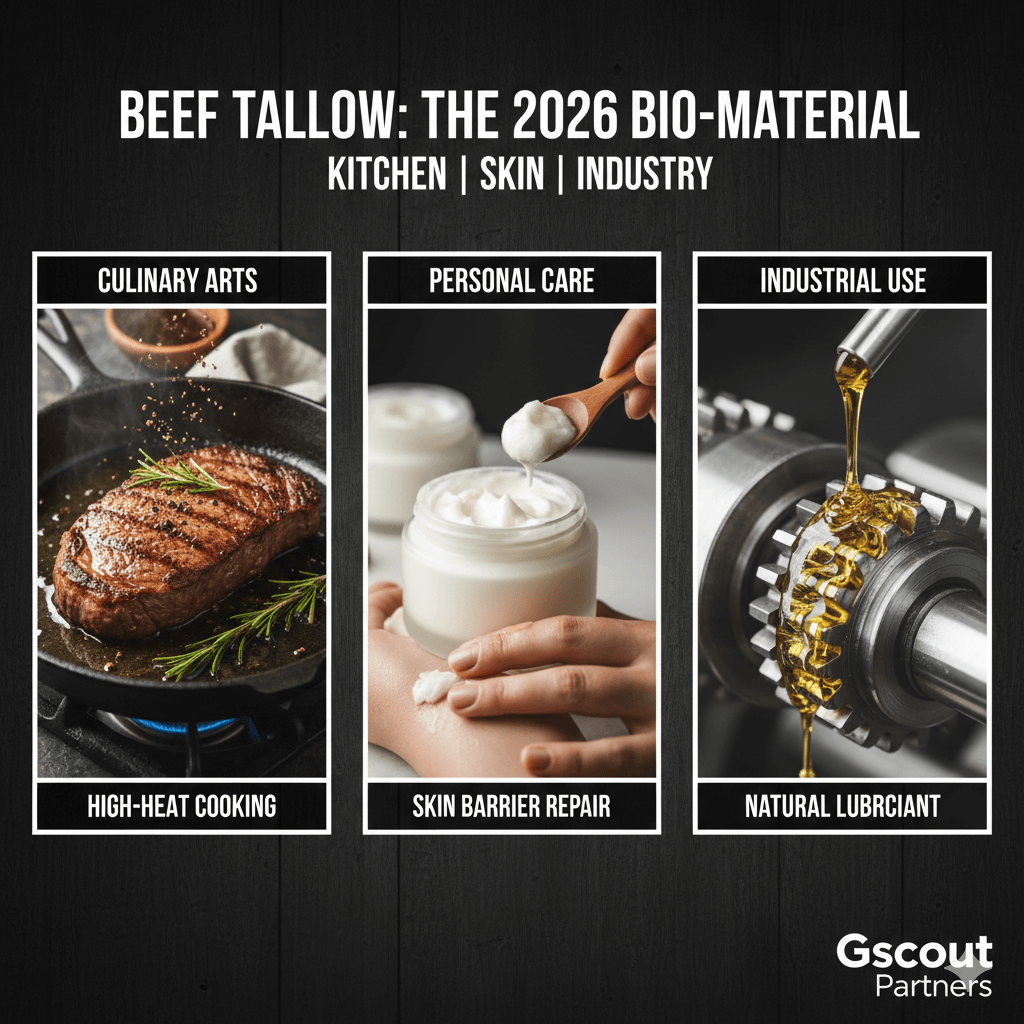
A. Culinary Arts: The High-Heat Hero
Professional chefs are abandoning vegetable oils for tallow due to its stability. Unlike seed oils, tallow does not easily oxidize or create free radicals when heated.
-
The Flavor Profile: It adds a “umami” depth that plant oils cannot replicate.
-
Modern Trend: Wagyu Tallow (+110% growth) is currently the gold standard for searing premium steaks and making world-class French fries.
B. Personal Care: “Biocompatible” Skincare
One of the biggest trends for 2026 is Ancestral Skincare. Tallow is unique because its fatty acid profile closely mimics human sebum (the oil our skin naturally produces).
-
The Barrier Repair: High levels of stearic acid help repair the skin’s lipid barrier.
-
Top Brands: Keep an eye on Primally Pure and Ancestral Cosmetics—they are leading the market with “Grass-fed & Finished” whipped tallow balms.
C. Industrial & Manufacturing
Tallow’s specific melting point and viscosity make it a superior natural lubricant.
-
Lubrication: Used in heavy-duty machinery where petroleum-based lubricants might contaminate organic environments.
-
Traditional Crafts: Still the preferred base for high-quality, slow-burning candles and “super-fatted” artisan soaps.
3. Comparison: Tallow vs. Lard vs. Seed Oils
To help you decide which fat fits your business or lifestyle, here is how tallow stacks up:
| Feature | Beef Tallow | Pork Lard | Seed Oils (Canola/Soy) |
| Consistency | Hard / Waxy | Soft / Creamy | Liquid |
| Flavor | Rich / Beefy | Neutral | Metallic / Neutral |
| Skin Comedogenic | 2 (Low-Mid) | 3 (Moderate) | Variable |
| Sustainability | High (Byproduct) | High (Byproduct) | Low (Monocrop) |
4. Why “Grass-Fed” Matters in 2026
For both the culinary and skincare industries, the source of the tallow is everything.
-
Grass-fed tallow contains up to 4x more Vitamin E and significantly higher levels of CLA, which has anti-inflammatory properties.
-
Grain-fed tallow often has a higher ratio of Omega-6 fatty acids, which can be pro-inflammatory for sensitive skin.
5. FAQs: Beef Tallow Expert Guide
Q: Does beef tallow smell like meat when used in skincare?
A: High-quality, “triple-rendered” tallow is almost odorless. Most 2026 brands infuse it with essential oils like Frankincense or Blue Tansy to provide a luxury scent profile.
Q: Is it safe for acne-prone skin?
A: While it mimics sebum, it is “occlusive.” If you have very oily skin, use it sparingly. However, for those with Eczema or Psoriasis, it is often considered a miracle balm.
Q: Why is it better for frying than vegetable oil?
A: Tallow has a higher oxidative stability. Vegetable oils contain polyunsaturated fats that break down into toxic aldehydes when heated; tallow’s saturated structure remains intact.
Final Verdict
Whether you are a chef looking for the perfect sear, a manufacturer seeking a natural lubricant, or a consumer wanting “clean” skincare, beef tallow is a versatile, sustainable powerhouse. It is a return to a more logical, waste-free way of living.