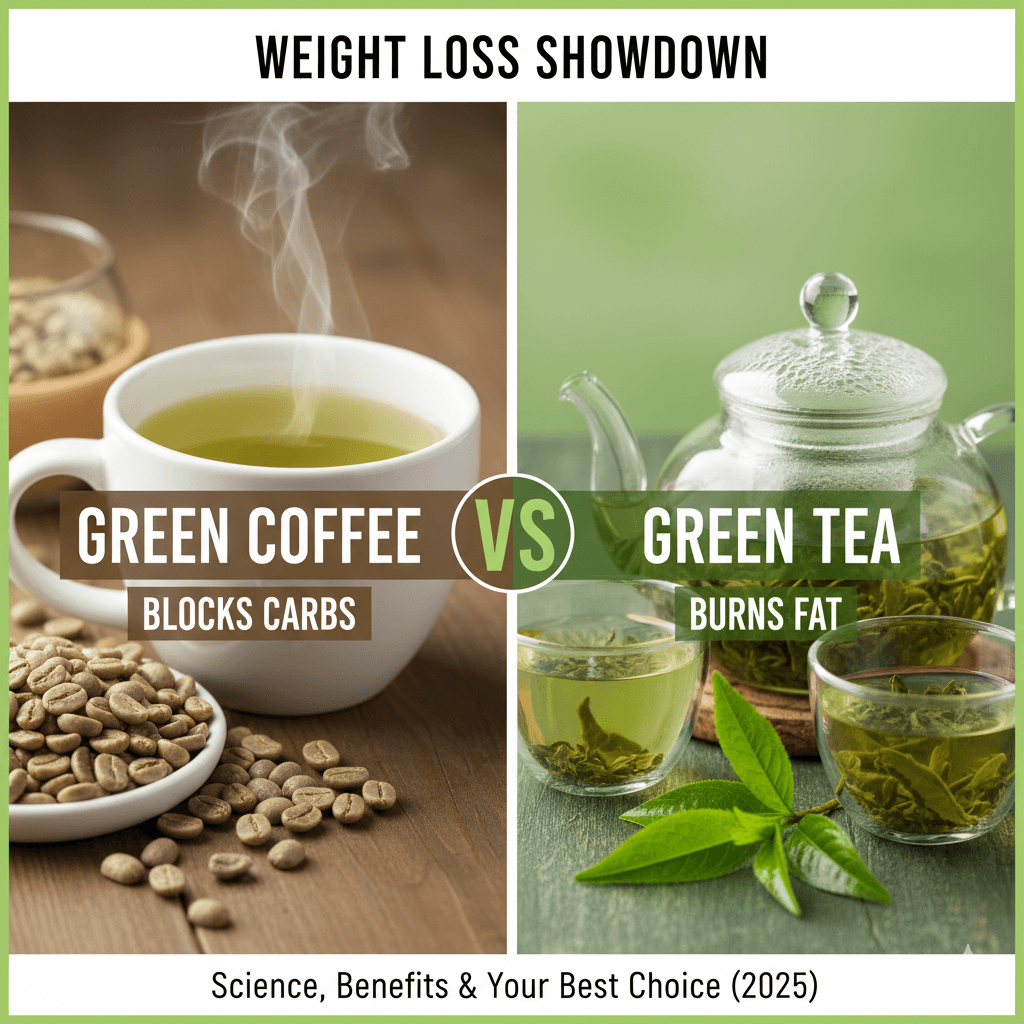
When it comes to Green Coffee vs. Green Tea, the two aren’t just different flavors—they are entirely different metabolic tools. While both are celebrated for weight loss, they work through unique chemical pathways in your body.
Here is a detailed comparison to help you choose the right one for your health goals.
1. The Core Active Compounds
The most significant difference lies in their primary antioxidant.
-
Green Coffee: The hero is Chlorogenic Acid (CGA). This polyphenol is lost when coffee is roasted, which is why regular black coffee doesn’t offer the same metabolic benefits.
-
Green Tea: The hero is EGCG (Epigallocatechin Gallate), a powerful catechin.
2. Weight Loss Mechanism: How They Work
They don’t just “burn fat”; they target different stages of the metabolic process.
| Feature | Green Coffee | Green Tea |
| Primary Action | Blocks Glucose Absorption in the gut. | Boosts Fat Oxidation (burning) during rest/exercise. |
| Fat Storage | Prevents fat accumulation by lowering insulin spikes. | Increases Thermogenesis (body heat production). |
| Appetite | Excellent for Appetite Suppression due to CGA. | Mild effect on hunger; better for detoxing. |
| Speed | Often leads to faster visible results in early weeks. | Works gradually for long-term weight maintenance. |
3. The Energy Experience (Caffeine vs. L-Theanine)
How you “feel” after drinking them is vastly different due to a secondary compound found only in tea.
-
Green Coffee: Provides a direct, steady caffeine boost (approx. 20-50mg per cup). It’s great for a morning “pick-me-up” to start your metabolism.
-
Green Tea: Contains less caffeine (~25-35mg) but includes L-Theanine, an amino acid that promotes “calm focus.” It prevents the jitters often associated with coffee.
4. Flavor Profile
-
Green Coffee: Has a very mild, neutral, and herbal taste. It does not taste like roasted coffee; it’s more like a light bean infusion. It is rarely bitter.
-
Green Tea: Has a vegetal, grassy, and earthy flavor. If over-steeped, it becomes quite bitter due to the tannins.
5. Summary: Which Should You Choose?
Choose Green Coffee if:
-
You struggle with sugar cravings or post-meal energy crashes.
-
You want to see faster results on the scale in the short term.
-
You prefer a mild, non-bitter taste.
Choose Green Tea if:
-
You want a long-term wellness drink that improves skin and heart health.
-
You are sensitive to caffeine and want to avoid any risk of jitters.
-
You want to enhance the fat-burning effects of your workouts.
Pro-Tip: Many people use both! A cup of Green Coffee in the morning to block carb absorption, and a cup of Green Tea in the afternoon for a calm, metabolism-boosting detox.
Recommended Reading Best Neurologists in Hyderabad 2026: Top Brain & Nerve Specialists →
Health & Safety FAQs
What are the disadvantages of green coffee? While beneficial, green coffee contains caffeine and chlorogenic acid, which can cause side effects if consumed in excess:
-
Jitteriness & Anxiety: The caffeine can overstimulate the nervous system.
-
Digestive Issues: It has a mild laxative effect and may cause stomach upset or diarrhea in sensitive individuals.
-
Mineral Interference: Tannins in coffee can slightly reduce the absorption of iron and calcium.
-
Heart Rate: It may cause a temporary increase in heart rate or “palpitations.”
Is green coffee safe for pregnancy? No. Medical professionals generally advise against green coffee during pregnancy and breastfeeding. Caffeine crosses the placental barrier and can affect fetal heart rate. Additionally, there is insufficient research on how high levels of chlorogenic acid affect fetal development. It is best to stick to decaffeinated alternatives or consult your doctor.
Can green coffee reduce belly fat? Yes, but it is not a “magic wand.” Scientific studies show that chlorogenic acid helps the liver process fatty acids and reduces glucose absorption. This leads to overall fat loss, including visceral (belly) fat. For best results, it must be paired with core-strengthening exercises and a calorie-controlled diet.
Usage & Preparation FAQs
How do you prepare green coffee?
-
Using Powder: Add 1–2 teaspoons of green coffee powder to a cup of hot (90°C) water. Let it steep for 5–6 minutes, then strain.
-
Using Whole Beans: Soak the beans overnight in water. The next morning, boil the water with the beans for 15 minutes on low heat. Let it cool, strain, and drink.
How to use green coffee for weight loss? The most effective way is to drink it 30 minutes before your largest meals (usually breakfast and lunch). This timing helps the chlorogenic acid block the absorption of carbohydrates from your food.
Can I add milk, sugar, or lemon to green coffee?
-
Milk: Avoid it. Milk proteins can bind to antioxidants and reduce their fat-burning potency.
-
Sugar: Avoid it. Adding sugar counteracts the weight-loss benefits.
-
Lemon/Honey: Recommended. A squeeze of lemon adds Vitamin C, which helps with antioxidant absorption, and a drop of honey can improve the raw, earthy taste.
Comparisons & Rules
Is green coffee better than black coffee? For weight loss, yes. Black coffee is roasted, a process that destroys nearly 90% of the chlorogenic acid. Green coffee retains this compound, making it a superior metabolic booster. However, black coffee is better for a high-intensity energy “kick” as it has more caffeine.
What is the 80/20 rule for coffee? In the context of health, this rule suggests that 80% of your intake should be functional, healthy brews (like green coffee or plain black coffee), while 20% can be reserved for “indulgence” coffees (like lattes or mochas) to ensure you don’t feel deprived while dieting.
Which coffee is best for fat loss? Any brand that is Standardized to 50% Chlorogenic Acid is best. Look for “Arabica” green coffee beans, as they typically have a higher antioxidant profile and a smoother taste than Robusta varieties.