
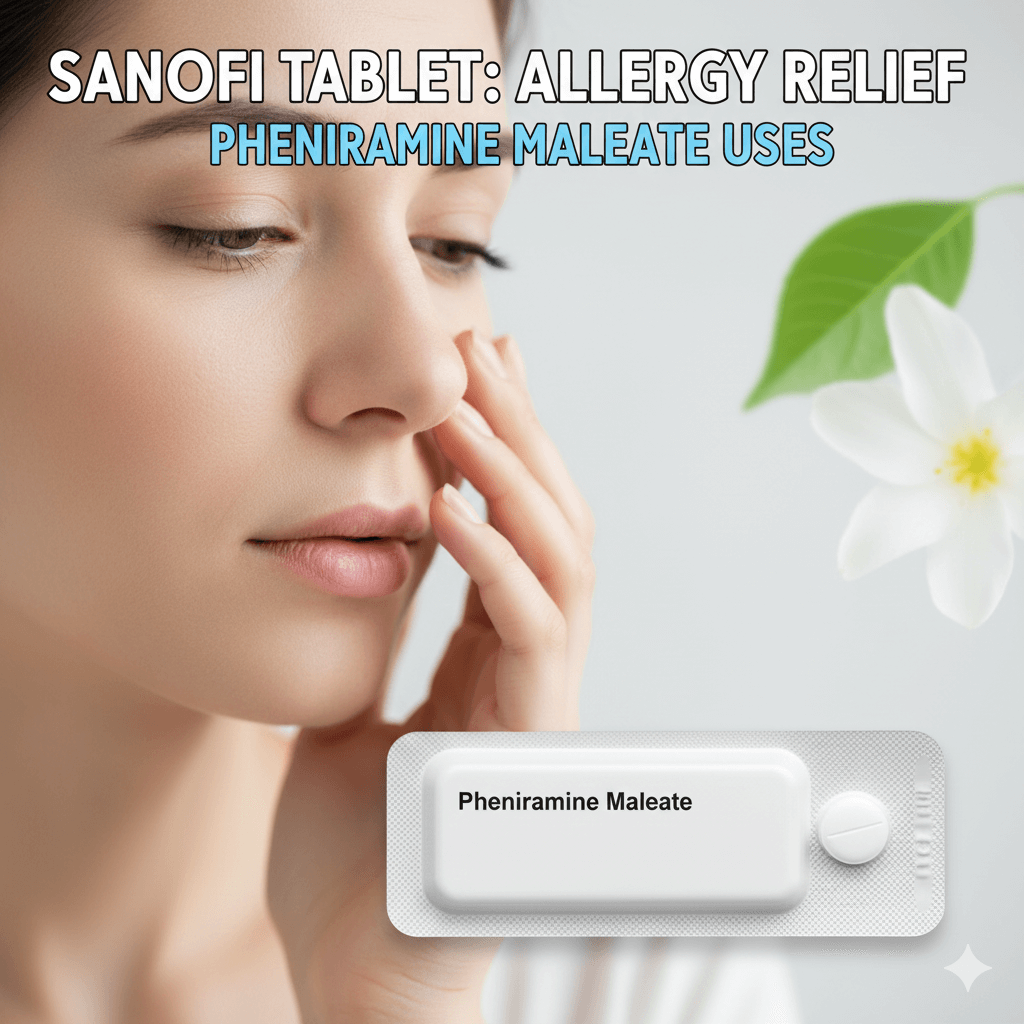
💊 Sanofi Tablet Uses: Understanding Pheniramine Maleate for Allergy Relief
⚠️ Disclaimer:
This information is for educational purposes only and is not a substitute for professional medical advice, diagnosis, or treatment. Always consult a healthcare provider for personalized medical advice regarding the use of the Sanofi tablet containing Pheniramine Maleate.
The Sanofi tablet containing Pheniramine Maleate 25 mg is a medication widely searched for, primarily because users want to know the specific Sanofi tablet uses. This medication is an antihistamine, and understanding its function is key to knowing its specific uses.
What is the Sanofi Tablet (Pheniramine Maleate)?
The core of the Sanofi tablet is Pheniramine Maleate, a first-generation antihistamine.
-
Class: Pheniramine Maleate is a classic H1 receptor antagonist.
-
Mechanism of Action: Histamine is a chemical released by the body in response to allergens, causing symptoms like itching, sneezing, and watery eyes. The Pheniramine Maleate Sanofi tablet works by blocking the action of histamine, thereby providing relief from allergic reactions.
Key Sanofi Tablet Uses (Pheniramine Maleate Tablet Uses)
The primary Sanofi tablet uses revolve around managing symptoms associated with allergic conditions. The typical Pheniramine Maleate Tablet uses include:
-
Allergic Rhinitis: This is the most common of the Sanofi tablet uses. It helps treat symptoms of hay fever or seasonal allergies, such as a runny nose, sneezing, and itchy/watery eyes.
-
Urticaria (Hives): The anti-histamine action of Pheniramine Maleate is effective in calming the severe itching and reducing the size of red, raised welts associated with hives or allergic skin reactions.
-
Insect Bites: It can be used to alleviate the localized itching and swelling that often results from insect stings or bites.
-
Allergic Conjunctivitis: It helps soothe the redness and watering of the eyes caused by allergies.
The primary goal of the Sanofi tablet uses is to manage the discomfort caused by histamine release in the body.
Important: Sanofi Tablet Side Effects
The Pheniramine Maleate Sanofi tablet is a first-generation antihistamine, which means it crosses the blood-brain barrier readily. Therefore, knowing about potential Sanofi tablet side effects is essential.
The most common Sanofi tablet side effects include:
-
Drowsiness/Sedation: This is the most significant side effect. Users of the Sanofi tablet should avoid driving or operating heavy machinery until they know how the medication affects them.
-
Dizziness and Impaired Coordination
-
Dry Mouth, Nose, or Throat
-
Constipation
If you experience severe or unusual side effects from the Pheniramine Maleate Sanofi tablet, consult a healthcare provider immediately.
Why Check Sanofi Tablet Uses?
Given the potential for sedation, reviewing the specific Pheniramine Maleate tablet uses and the associated side effects is critical before starting this Sanofi tablet for any allergic condition.
❓ People May Ask (FAQ) About Sanofi Tablet
| Question | Answer |
| What are the main Sanofi Tablet uses? | The main Sanofi Tablet uses are for relieving symptoms of various allergies, including sneezing, runny nose, itchy eyes, and itchy skin rashes or hives. |
| Is the Pheniramine Maleate Sanofi Tablet safe for daily use? | The Pheniramine Maleate Sanofi tablet should only be used as directed by a healthcare professional. Prolonged or chronic use requires a doctor’s guidance. |
| What is the most significant side effect of the Sanofi Tablet? | The most significant side effect of the Sanofi tablet (Pheniramine Maleate) is drowsiness or sedation, meaning caution is required when performing tasks like driving. |
| Is Pheniramine Maleate used for treating common colds? | While the Sanofi tablet can relieve cold symptoms like a runny nose, its main use is for allergies. It may be included in some cold preparations due to its anti-runny nose action. |
| What is the active ingredient in the Sanofi tablet? | The active ingredient in the widely searched Sanofi tablet (25 mg) is Pheniramine Maleate. |