Tretinoin Cream: The Complete Beginner’s Guide to Using the Skincare Powerhouse
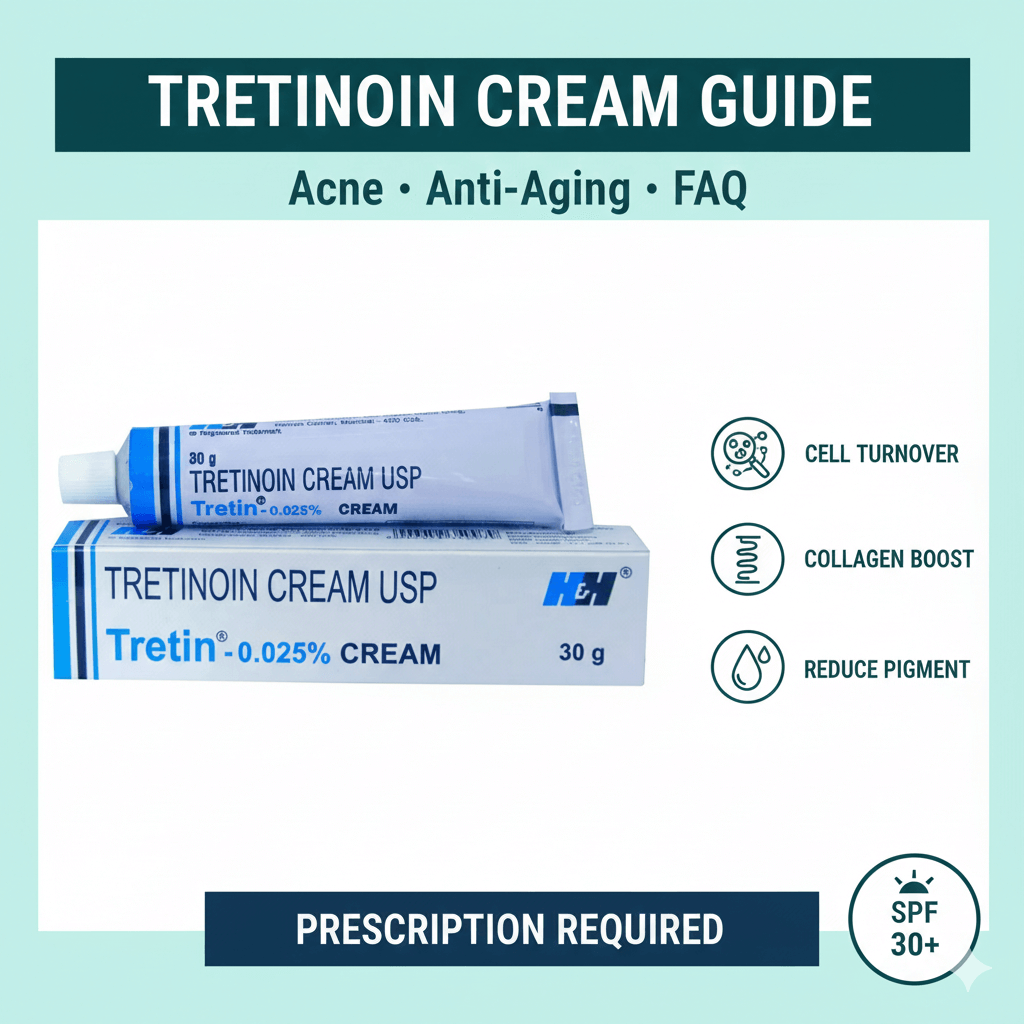
Tretinoin—often referred to as Retin-A—is widely considered the gold standard in topical prescription skincare. It’s a powerful tool used by dermatologists to treat everything from stubborn acne to deep-set wrinkles.
1. 🔬 What, How, and Whom: Tretinoin Basics
| Question | Answer |
| What is Tretinoin? | Tretinoin is a pure form of retinoic acid, a highly potent Vitamin A derivative. Unlike over-the-counter retinol, Tretinoin is active immediately upon application, making it faster and more effective. |
| How Does It Work? | It drastically accelerates skin cell turnover (unclogging pores and shedding dull skin) and stimulates collagen production, addressing acne, wrinkles, and pigmentation simultaneously. |
| Whom Is It For? | Tretinoin is primarily prescribed for Acne, Fine Lines & Wrinkles, and Hyperpigmentation (dark spots/sun damage). It is effective in maintaining clear skin after a course of oral Isotretinoin. |
2. 📝 Application Guide: How to Use Tretinoin for Beginners
Tretinoin is highly potent and must be introduced slowly to minimize the “Tretinoin peel” (redness, irritation, and flaking).
| Usage Tip | Detail |
| When to Apply | Nighttime only. Tretinoin breaks down quickly when exposed to sunlight. |
| The Amount | Use only a pea-sized amount for the entire face. Using more only increases side effects. |
| Beginner Method | The Sandwich Method: Apply a mild moisturizer before and after the Tretinoin layer to buffer the drug and reduce irritation. |
| Frequency | Start with 2–3 times per week (e.g., Monday, Wednesday, Friday). Gradually increase as your skin builds tolerance. |
| Must-Do | Apply a broad-spectrum SPF 30 or higher every morning, without exception. |
3. ❓ Comprehensive Tretinoin FAQ
Safety, Dosage, and Tolerance
| FAQ | Answer |
| Who cannot use Tretinoin cream? | Pregnant or Breastfeeding Women are strictly prohibited from using Tretinoin. Individuals with excessively sensitive skin or active eczema/dermatitis should use caution and consult a doctor first. |
| Is Tretinoin 0.05 or 0.025 better? | Better is subjective to your goal and tolerance. 0.025% is typically for beginners or sensitive skin. 0.05% is more potent, often used for moderate-to-severe acne or when 0.025% is no longer effective. |
| What is a good age to start Tretinoin? | For acne, sometimes during adolescence. For anti-aging, most start in their mid-to-late 20s or early 30s when collagen production begins to slow. |
| Are there any negative effects of Tretinoin? | Common temporary side effects include dryness, peeling, redness, itching, and sun sensitivity. |
| Does Tretinoin age your face? | Absolutely not. Tretinoin is one of the few topicals proven to reverse the signs of photoaging by building new collagen. |
| Why is my skin getting darker after using Tretinoin? | This is usually due to sun exposure. Tretinoin increases sun sensitivity, and even minor sun exposure can trigger severe hyperpigmentation (darkening). This is a strong sign you are not using enough SPF. |
| Why are people quitting Tretinoin? | Most people quit due to the initial, harsh side effects (peeling, dryness) or lack of patience, as results take several months. |
Routine and Troubleshooting
| FAQ | Answer |
| What is the best skincare routine while using Tretinoin? | AM: Gentle Cleanser, Hydrating Serum (optional), SPF 30+. PM: Gentle Cleanser, Wait 30 mins, Tretinoin (or Sandwich Method), Barrier Repair Moisturizer. |
| What moisturizer/night cream to use with Tretinoin? | Choose a simple, restorative, and non-comedogenic formula containing ingredients like ceramides, hyaluronic acid, or niacinamide to support the skin barrier. |
| How quickly does Tretinoin work? | Acne: Initial purging (worsening) might occur at 2-4 weeks. Visible improvement in 6–8 weeks. Anti-Aging: Requires 6–12 months of consistent use. |
| How do I know if Tretinoin is working? | Initial signs are smoother skin texture and faster healing of acne lesions. |
| What happens if I stop using Tretinoin for a week? | Your results will slow, but there is no damage. To restart, reduce the frequency initially (e.g., 3 times a week) to re-acclimate your skin. |
| Can Tretinoin remove dark neck? | Tretinoin can be used for pigmentation on the neck, but only under strict dermatologist instruction. The neck skin is thinner and more prone to severe irritation. |
4. 🗣️ People Also Ask: Common Related Queries
Tretinoin & Medications
| FAQ | Answer |
| Can I use azelaic acid with tretinoin? | Yes, but strategically. Azelaic acid can complement Tretinoin by treating redness and inflammation. To manage irritation, many doctors advise using Azelaic Acid in the morning and Tretinoin at night. |
| Can tretinoin cause a sore throat? | This is extremely rare with topical Tretinoin. Sore throat is a recognized, though uncommon, side effect primarily associated with oral retinoids (like Isotretinoin). If you experience severe symptoms, stop use and consult a doctor immediately. |
| How to use tretinoin on warts? | Tretinoin is sometimes used off-label to treat certain types of warts by eroding the skin’s surface. This must only be done under the direct supervision of a dermatologist due to the risk of severe irritation and scarring on sensitive areas. |
Eczema & General Skin Health
| FAQ | Answer |
| Is tretinoin good for eczema? | Generally, NO. Tretinoin is highly irritating and drying, which is the opposite of what sensitive, barrier-compromised eczematous skin needs. Applying Tretinoin to active eczema can cause severe flares and burning. |
| What is the biggest trigger for eczema? | Triggers vary widely but often include dry skin, environmental allergens (pollen, dust mites), irritants (harsh soaps, detergents, perfumes), and stress. |
| What is the 3 minute rule for eczema? | It refers to the crucial practice of applying moisturizer within three minutes of stepping out of the bath or shower. This locks in the moisture absorbed by the skin, helping to repair the skin barrier. |
| What vitamin is lacking when you have eczema? | Vitamin D is the most commonly studied nutrient, with many eczema sufferers showing lower levels. Supplementation may help reduce symptoms, but it is not a cure. |
| How to fight eczema naturally? | Focus on moisturizing frequently (especially using the 3-minute rule), identifying and avoiding personal triggers, using gentle, fragrance-free cleansers, and taking cool or lukewarm baths. |
| What time of day is eczema the worst? | Eczema is often the worst at night. This is partly due to the body’s natural cycle (cortisol levels drop, increasing inflammation) and heat from bedding, which triggers itching. |
🎬 References & Video Guide
-
Video Guide: How to use Tretinoin for beginners: Dermatologist guide (YouTube)
Recommended Reading Diabetes Symptoms, Treatment & Prevention 2026: Complete Guide →
⚠️ Medical Disclaimer
This blog post is for informational purposes only. Tretinoin is a powerful, prescription-strength medication that should only be used under the direct guidance of a licensed healthcare provider or dermatologist. Do not attempt to self-diagnose or self-treat any skin condition based on this information. Never disregard professional medical advice or delay seeking it because of something you have read here.